A&S NEURO SKINCARE RESEARCH

Where Skin Meets
Sensory Neuroscience

A&S Explores Neuro Skincare Through One Question: How Does the Personal Exposome Shape Biology Through the Skin and Senses?

The skin is a vital interface where environmental factors, stress, scent, touch and lifestyle interact with the body through sensory receptors, neural pathways and cellular signaling.

By integrating Exposome, Sensory, Olfactory and Neural Pathway research with Bio-Responsive Ingredients, A&S studies how the skin senses, responds and adapts to external stimuli.

Stress-Induced Disruption
of Skin Homeostasis

Personal Exposome Stressors Activate Central Stress Pathways, Initiating Neuro-Immune-Endocrine Signaling That Alters Cellular Responses and Disrupts Skin Homeostasis.

  1. Woman working at a laptop with coffee and food in a busy urban environment

    Personal Exposome

  2. Illustration of the brain and central nervous pathways over a woman's profile

    Central Stress Response

    Explore
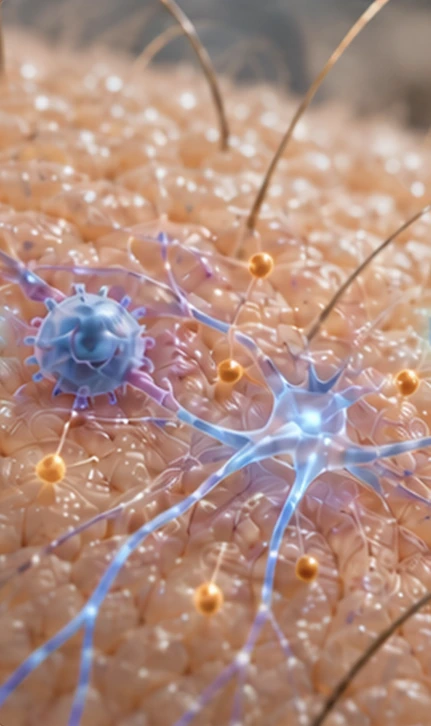
  3. Illustration of nerves, immune cells, and signaling connections within the skin

    Cutaneous Neuro-Immune-Endocrine Network

    Explore
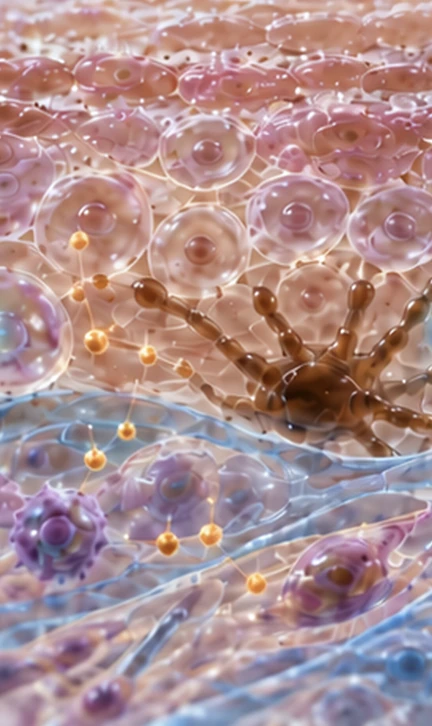
  4. Illustration of cellular signaling and responses in skin tissue

    Cellular Responses in Skin

    Explore
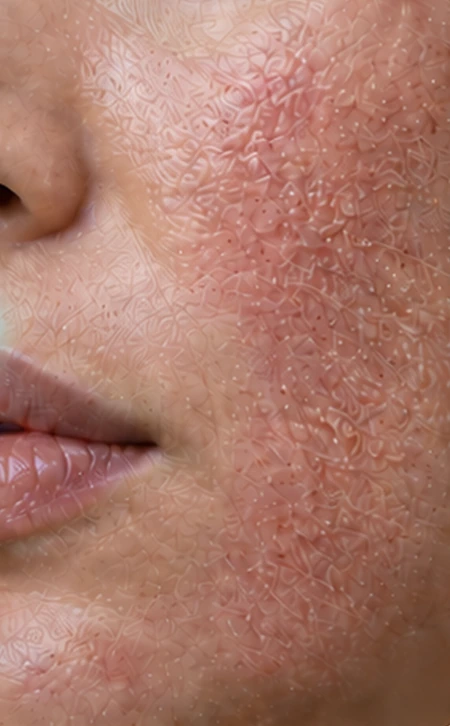
  5. Close-up illustration of disrupted skin texture on a woman's cheek

    Loss of Skin Homeostasis

Central Stress Response

Central Stress Response

How Personal Exposome Stressors Are Translated into Biological Signals

Personal exposome stressors activate coordinated neural, endocrine and neuroimmune pathways that transmit stress signals throughout the body and toward the skin.

Personal exposome stressors activate pathways from the brain toward the skin, with connected illustrations of the HPA axis, autonomic nerves and neuropeptide signaling

HPA Axis / Cortisol

Hypothalamus → CRH → Pituitary → ACTH → Adrenal Cortex → Cortisol

Autonomic Nervous System

Sympathetic Activation · Parasympathetic Modulation

Neuropeptide Signaling

Substance P · CGRP · VIP · NPY

Cutaneous Neuro-Immune-Endocrine Network

Cutaneous Neuro-Immune-Endocrine Network

Where Neural, Immune and Endocrine Signals Converge in the Skin

The skin functions as an integrated signaling network in which sensory nerves, immune cells and local endocrine pathways continuously communicate and respond to stress.
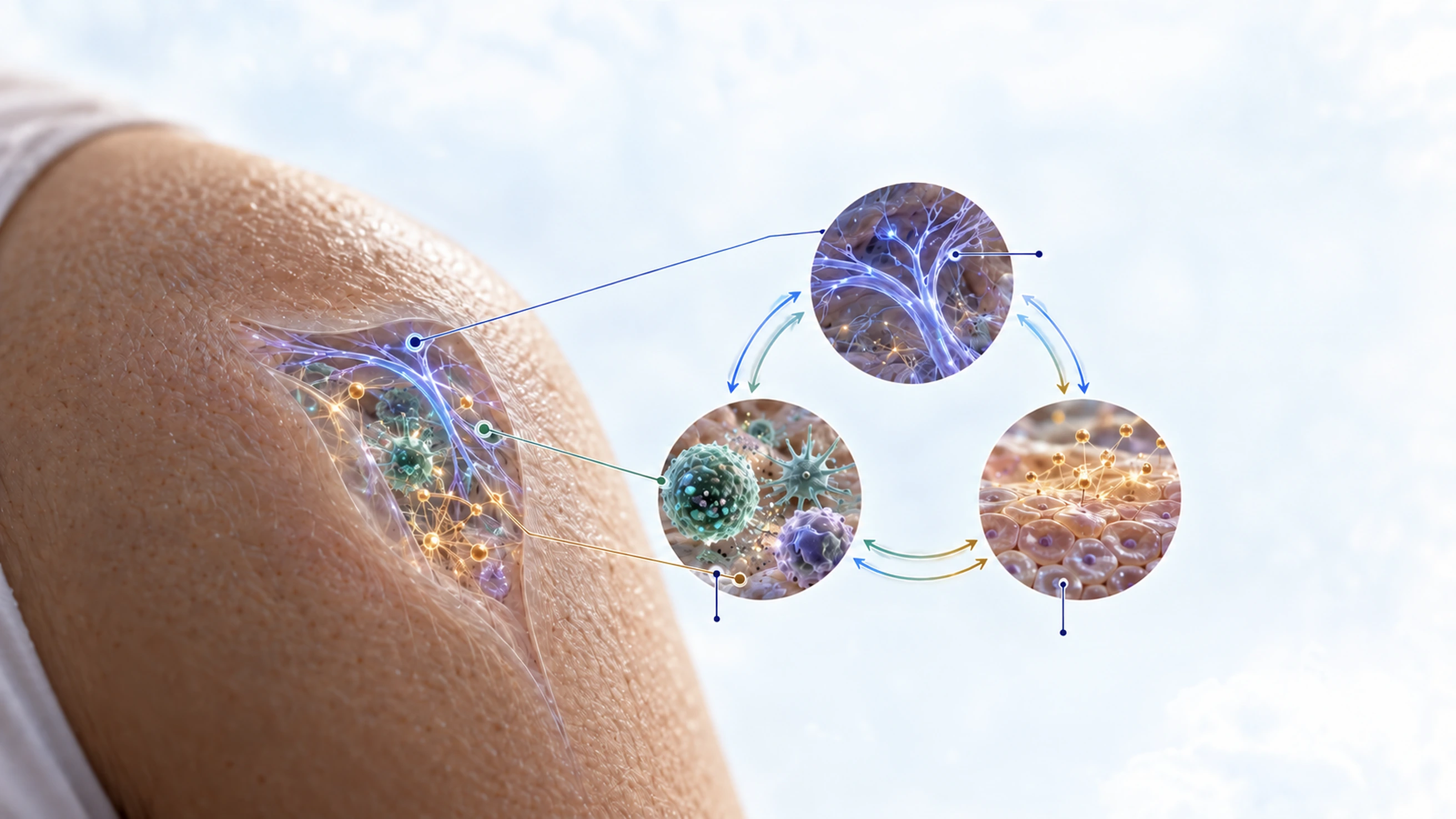
Skin cross-section connected to three interacting systems: sensory nerves, immune cells and local endocrine signaling, with two-way communication between them

Cutaneous Nervous System

Sensory Receptors · Nerve Fibers · Neuropeptides

Cutaneous Immune System

Mast Cells · Macrophages · Dendritic Cells · Cytokines

Cutaneous Endocrine System

Local HPA-like Axis · CRH · ACTH-like Peptides · Cortisol

Cellular Responses in Skin

Cellular Responses in Skin

How Stress Signaling Alters Skin Cell Behavior

Neural, immune and endocrine stress signals reshape the behavior of multiple skin cell populations, progressively weakening the coordinated functions that maintain skin homeostasis.
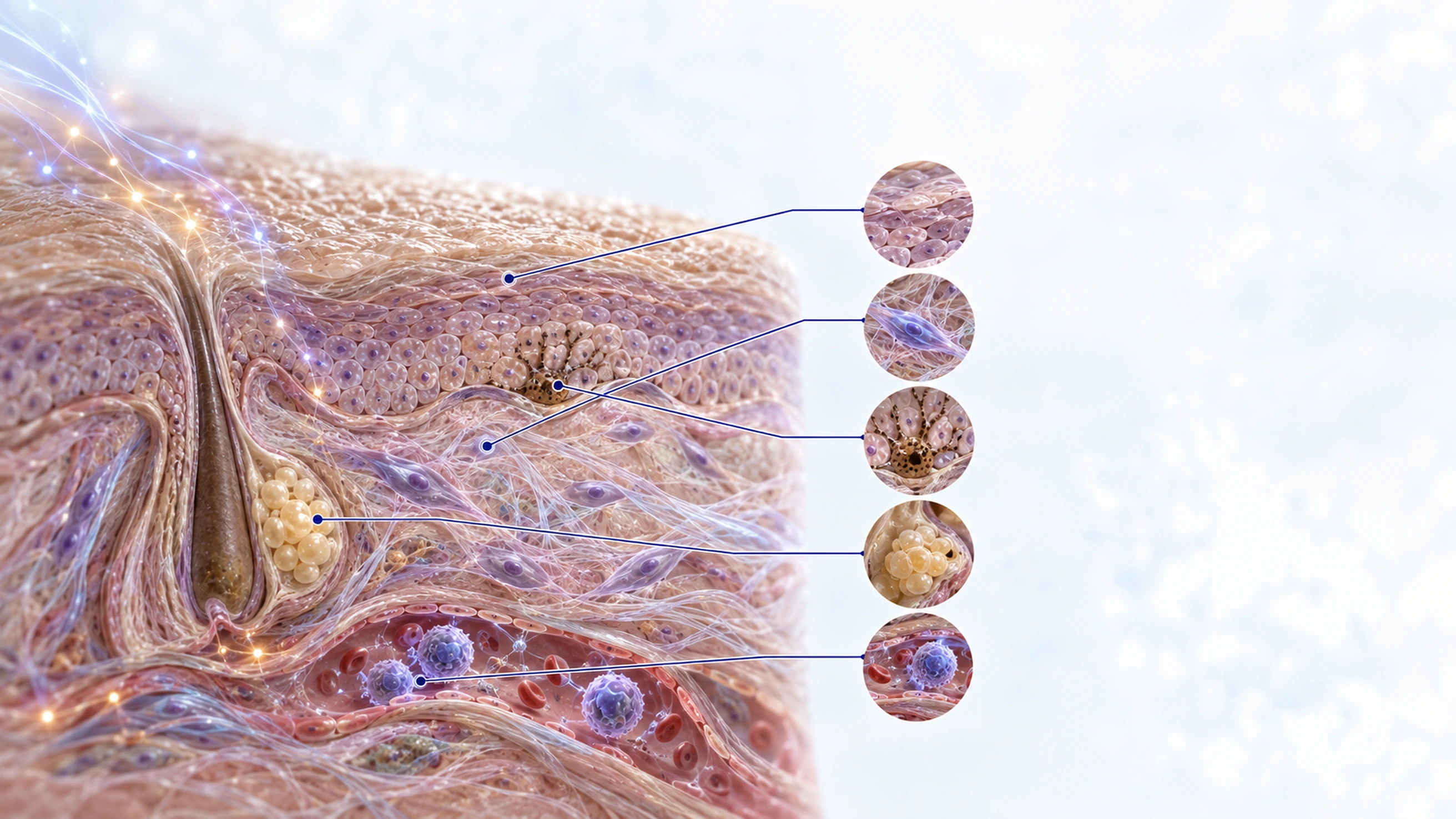
Detailed skin cross-section with five connected illustrations showing keratinocytes, fibroblasts, melanocytes, sebocytes, and immune and endothelial cells

Keratinocytes

Impaired Differentiation · Reduced Barrier Renewal

Fibroblasts

Collagen & Elastin ↓ · MMP Activity ↑

Melanocytes

Altered Pigmentation Signaling

Sebocytes

Altered Sebum Production · Increased Oxidation

Immune & Endothelial Cells

Inflammation ↑ · Vascular Reactivity ↑

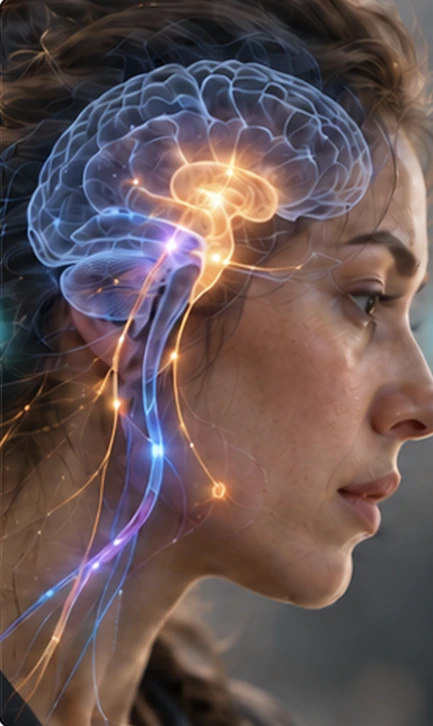
Woman in profile with illuminated brain and sensory pathways extending through her skin

Brain-Skin Axis

A Continuous Feedback Loop

The brain and skin communicate continuously through neural, endocrine and immune signals.
Stress-related signals from the central nervous system influence skin responses,
while sensory and inflammatory signals generated in the skin return to the brain.
This bidirectional feedback may maintain homeostasis—or contribute to its disruption
when stress becomes prolonged.

Skin Brain

Peripheral Input Signals

Sensory signals
(nociceptors, mechanoreceptors)
Cytokines
(IL-1β, IL-6, TNF-α, etc.)
Neuropeptides
(e.g. Substance P, CGRP, VIP, NPY)
Hormones
(e.g. cortisol, melatonin)
BRAIN (CNS) Brain Skin cross-section with a hair follicle SKIN
CONTINUOUS
FEEDBACK

Brain Skin

Central Output Signals

Autonomic signals
(ANS)
Neuroendocrine signals
(HPA axis, e.g. cortisol)
Neuropeptides
(e.g. CRH, AVP)
Hormones
(e.g. cortisol, melatonin)
  1. Upstream Signals to Skin Target Cells

    • Neuropeptides
    • Cytokines
    • Hormones
    • Sensory
      Signals
    • Stress-related
      Signals
  2. Skin Target Cells

    • Keratinocytes
    • Fibroblasts
    • Melanocytes
    • Immune Cells
    • Sebocytes
    • Endothelial Cells
  3. Regulated Skin Functions

    • Barrier
      Homeostasis
    • Immune
      Surveillance
    • Sensory
      Perception
    • Pigmentation
    • Sebum
      Regulation
    • Wound
      Healing
    • ECM
      Remodeling

SCIENCE
FOR HEALTHY SKIN
TODAY AND TOMORROW

A&S INTEGRATED RESEARCH FRAMEWORK

The Brain–Skin Neurocutaneous Feedback Loop

An integrated systems model mapping bidirectional communication across the brain–skin axis.
Personal Exposome & Stressors

Environmental | Psychological | Lifestyle | Physical

Activates central and peripheral
stress response systems

Brain

Central processing
and stress integration
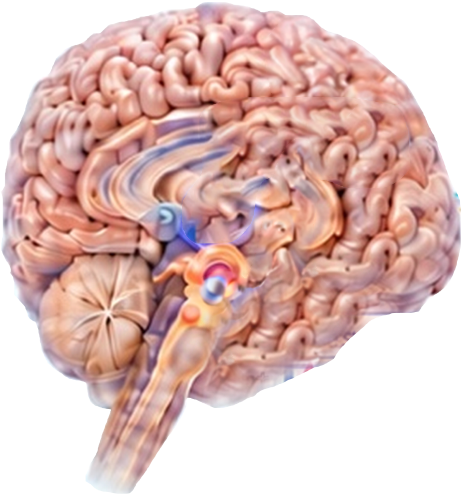
Cutaway of the brain showing central stress-processing structures

Dopamine
Serotonin
Oxytocin
Glutamate
GABA

Hypothalamus Limbic system

Emotion
Stress response
Neuroendocrine regulation

Skin

Peripheral response
and homeostasis

Skin cross-section showing peripheral neural, vascular and cellular pathways

Barrier function
Pigmentation
Immune regulation
Sensory signaling

  1. 01HPA Axis (Stress Hormone Pathway)

    1. Hypothalamus
    2. CRH
    3. Pituitary
    4. ACTH
    5. Adrenal
      gland
    6. Glucocorticoid
    7. Cortisol
  2. 02Sympathetic–Adrenal Medullary Pathway

    1. Autonomic
      nervous system
    2. Sympathetic
    3. Adrenal medulla
      Adrenalin / Noradrenalin
    4. DNA damage
  3. 03Parasympathetic Pathway

    1. Autonomic
      nervous system
    2. Parasympathetic
    3. Acetylcholine (ACh)
    4. Immune suppression /
      Itch
  4. 04CRH-POMC Signaling (Pigmentation Pathway)

    1. CRH
    2. POMC
    3. α-MSH
    4. Melanocytes
    5. Melanin
    6. Skin barrier /
      Pigmentation
  5. 05Skin-to-Brain Feedback (Cutaneous HPA Pathway)

    1. Keratinocyte
    2. CRH
    3. POMC
    4. ACTH
    5. Glucocorticoid
    6. Cortisol

Neuron, Mast cells,
NK cells, Neutrophils

Histamine

Substance P (SP)

Inflammatory cytokines
Acetylcholine (ACh) increase

Cutaneous POMC connects to α-MSH in the pigmentation pathway. Cutaneous CRH signals through the neuroimmune cells shown here, via histamine and directly to Substance P, which feeds back to the brain.

How the Exposome Directly Impacts Skin

External and internal stressors act directly on skin cells, initiating molecular signals that progressively reshape skin function and appearance.

  1. Exposome stressors meeting skin: UV radiation, pollution, climate stress, diet and lifestyle, stress and sleep deprivation

    Direct Skin Targets

    Keratinocytes · Fibroblasts ·
    Mast Cells · Sensory Nerve Endings ·
    Melanocytes · Immune Cells

  2. Intracellular signaling across a network of skin cells

    Intracellular Signaling

    NF-κB · MAPK · JAK/STAT ·
    NLRP3 · ROS · Ca2+

  3. Molecular mediator release; labeled cytokines, chemokines and prostaglandins

    Mediator Release

    Cytokines · Chemokines ·
    Neuropeptides · MMPs ·
    Histamine · Prostaglandins

  4. Disrupted skin tissue with visible immune, neural and vascular structures

    Tissue-Level Disruption

    Barrier Damage · Inflammation ·
    Oxidative Stress · ECM Breakdown ·
    Vascular Imbalance ·
    Microbiome Dysbiosis

  5. Close-up illustration of visible skin outcomes on a woman's face

    Visible Skin Outcomes

    Dryness · Sensitivity · Itching ·
    Acne · Dermatitis · Pigmentation ·
    Delayed Healing · Skin Aging

UV RADIATIONPOLLUTIONCLIMATE STRESSDIET & LIFESTYLESTRESSSLEEP DEPRIVATION
Cytokines Chemokines Prostaglandins

How Exposome Stressors Disrupt the Skin Barrier

A Progressive Biological Cascade From Exposure to Barrier Breakdown

  1. Exposome-induced mediators above the skin surface

    Exposome-Induced Mediators

    Cortisol · Catecholamines ·
    Neuropeptides · Cytokines · ROS

  2. Action on skin cells, showing a mast cell and a fibroblast

    Action on Skin Cells

    Keratinocytes · Mast Cells ·
    Immune Cells · Fibroblasts ·
    Sensory Nerves

  3. Cytokines and reactive oxygen species influencing skin biology

    Molecular & Biological Responses

    Lipid Synthesis ↓ · Structural Proteins ↓ ·
    Tight Junctions ↓ · NMF ↓ ·
    Inflammation ↑ · Dysbiosis ↑

  4. Irritants, allergens and microbes penetrate a weakened skin barrier; increased water loss (TEWL) escapes upward CORE BIOLOGICAL OUTCOME

    Skin Barrier Disruption

    Lipid Loss · Junction Breakdown ·
    NMF Deficiency · High TEWL ·
    Microbial Infiltration

  5. Dry and sensitized skin illustrated on a cheek

    Clinical Consequences

    Dryness · Sensitivity · Itching ·
    Inflammation · Delayed Healing ·
    Premature Aging

  6. Exposome stressors at the center of a repeating cycle of barrier disruption, inflammation and sensitivity, increased stress perception and neuroendocrine activation

    Vicious Cycle

    Barrier Disruption → Inflammation &
    Sensitivity → Increased Stress Perception
    → Neuroendocrine Activation →
    Barrier Disruption

Mast Cell Fibroblast Cytokines ROS
IrritantsAllergensMicrobes
Increased Water Loss (TEWL) Barrier Disruption Inflammation & Sensitivity Increased Stress Perception Neuroendocrine Activation Exposome Stressors

Neurocosmetics

Science of Brain–Skin Communication

Drawing on our understanding of the exposome, the skin–brain axis and skin barrier biology, A&S explores
how scientific communication between skin and brain can be translated into neurocosmetic strategies.

Neurocosmetics Mechanisms

  1. Receptor Binding

    Specific ligands bind to
    neuronal receptors on skin cells,
    initiating a signal.

  2. Signal Activation

    Binding triggers an intracellular
    cascade, converting the external
    signal into an internal response.

  3. Cellular Response

    The signal leads to positive cellular
    changes like increased collagen
    production, improved hydration, and
    enhanced barrier function.
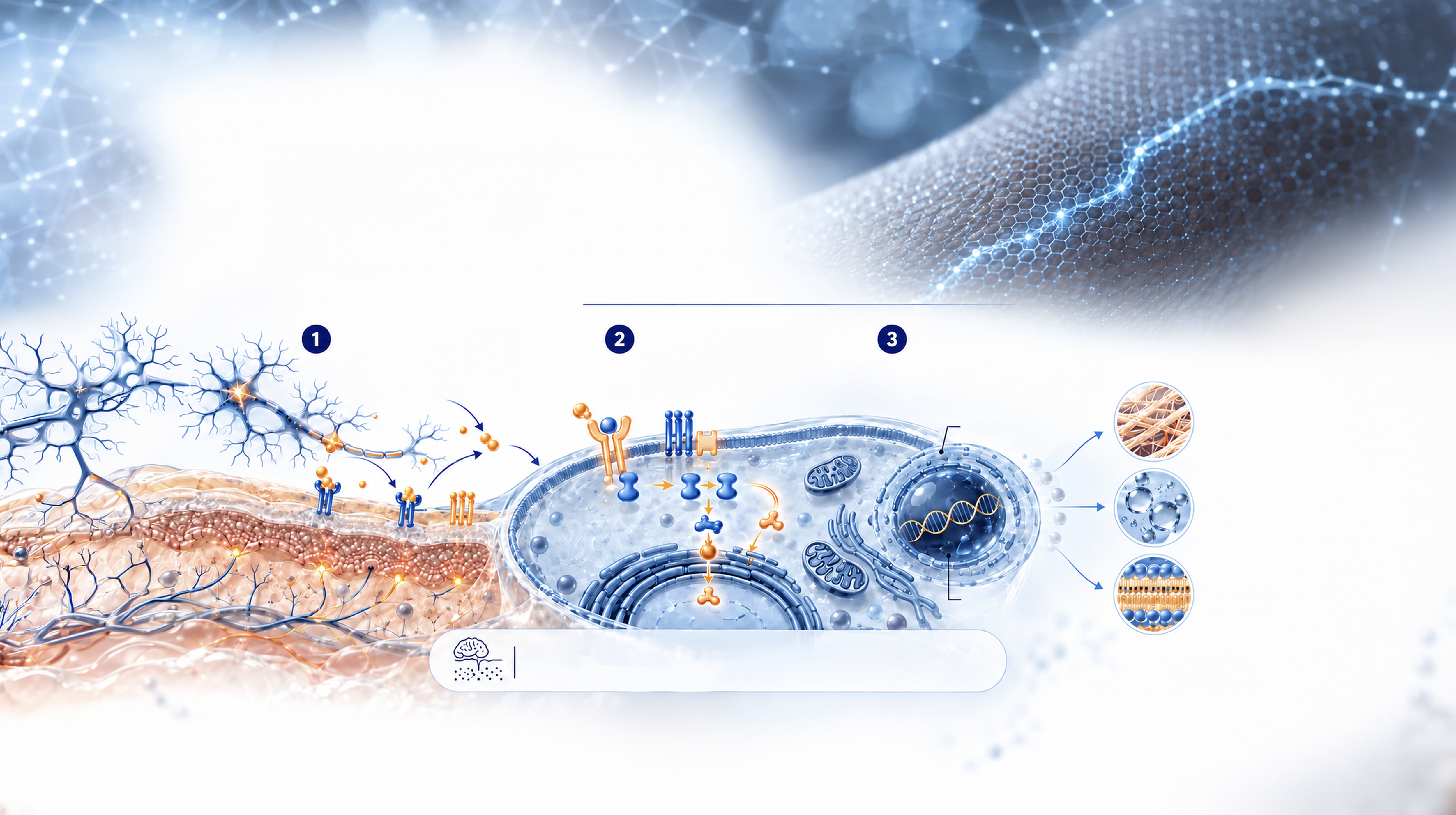
Continuous illustration of a sensory neuron, skin receptors and a skin cell, connected to collagen, hydration and barrier function Skin cell Nucleus Endoplasmic
Reticulum
  • Collagen
    Production
  • Improved
    Hydration
  • Enhanced
    Barrier Function
Explore
Neurocosmetics Benefits

Neurocosmetics Benefits

Neurocosmetics act on multiple targets and pathways to modulate neuroimmune responses, restore skin balance, and enhance overall skin health and well-being.

Barrier Repair & Resilience

TRPV1/ACh Pathway

  • Repair moisture barrier
  • Reduce TEWL
  • Strengthen skin defense

Calm & Soothe Sensitivity

TRPV/MRGPRK2 Pathway

  • Relieve itching
  • Reduce inflammation
  • Calm reactive skin

Brighten & Even Tone

POMC/α-MSH Pathway

  • Inhibit melanin production
  • Fade dark spots
  • Promote skin radiance

Anti-Aging & Firming

POMC/ACTH Pathway

  • Delay visible aging signs
  • Improve elasticity
  • Boost skin vitality

Mind–Skin Well-Being

Neuro Sensory Pathway

  • Reduce stress impact on skin
  • Balance elasticity
  • Promote healthy glow from within
Key Neurocosmetics Ingredient Categories

Key Neurocosmetics Ingredient Categories

A&S explores targeted ingredient categories that interact with sensory, neural and stress-response pathways to support skin comfort, resilience, appearance and mind–skin well-being.

From Molecular Signaling to Sensory Well-Being

Neuropeptides / Biomimetic Peptides

Modulate neuropeptide signaling and reduce neurogenic inflammation.

Happy Skin & Endorphin Boosters

Enhance mood, promote endorphin release and improve skin comfort.

TRP Channel Modulators

Regulate sensory perception and reduce sensitivity & inflammation.

Brightening Actives for Neuro-Melanin Axis

Inhibit neuroinflammation and melanin synthesis for radiant, even skin tone.

Adaptogens & Neuro-Aromachology

Balance stress response and support emotional well-being through scent.